
Drainage Systems That Protect Foundation Walls
Gutter Installation & Replacement in Jefferson for properties with basement seepage, eroded soil along foundations, and overflowing gutters that dump water directly against crawl spaces
Water pouring off roof edges during storms saturates soil next to foundations, creating hydrostatic pressure that forces moisture through basement walls and causes settlement as saturated ground shifts. Seamless gutter installation by KC & Sons Construction moves roof runoff away from the building, directing it through downspouts to areas where it can drain safely without undermining foundation support. Gutter systems matter most on homes with shallow foundation depths, finished basements vulnerable to water damage, and landscaping grades that slope toward the structure instead of away from it.
Seamless gutters are formed on-site from continuous coil stock, eliminating the joints where sectional gutters typically leak and fail. The system gets pitched at one-quarter inch per ten feet of run, creating enough slope to move water toward downspouts without creating visible sag or standing water. Downspout extensions carry water at least six feet from foundation walls—farther in areas with clay soil that drains slowly—and gutter guards prevent leaf buildup that blocks flow during Jefferson's heavy autumn leaf drop and spring storms.
Schedule a property evaluation to assess current drainage patterns and determine gutter sizing based on your roof area and typical rainfall intensity.
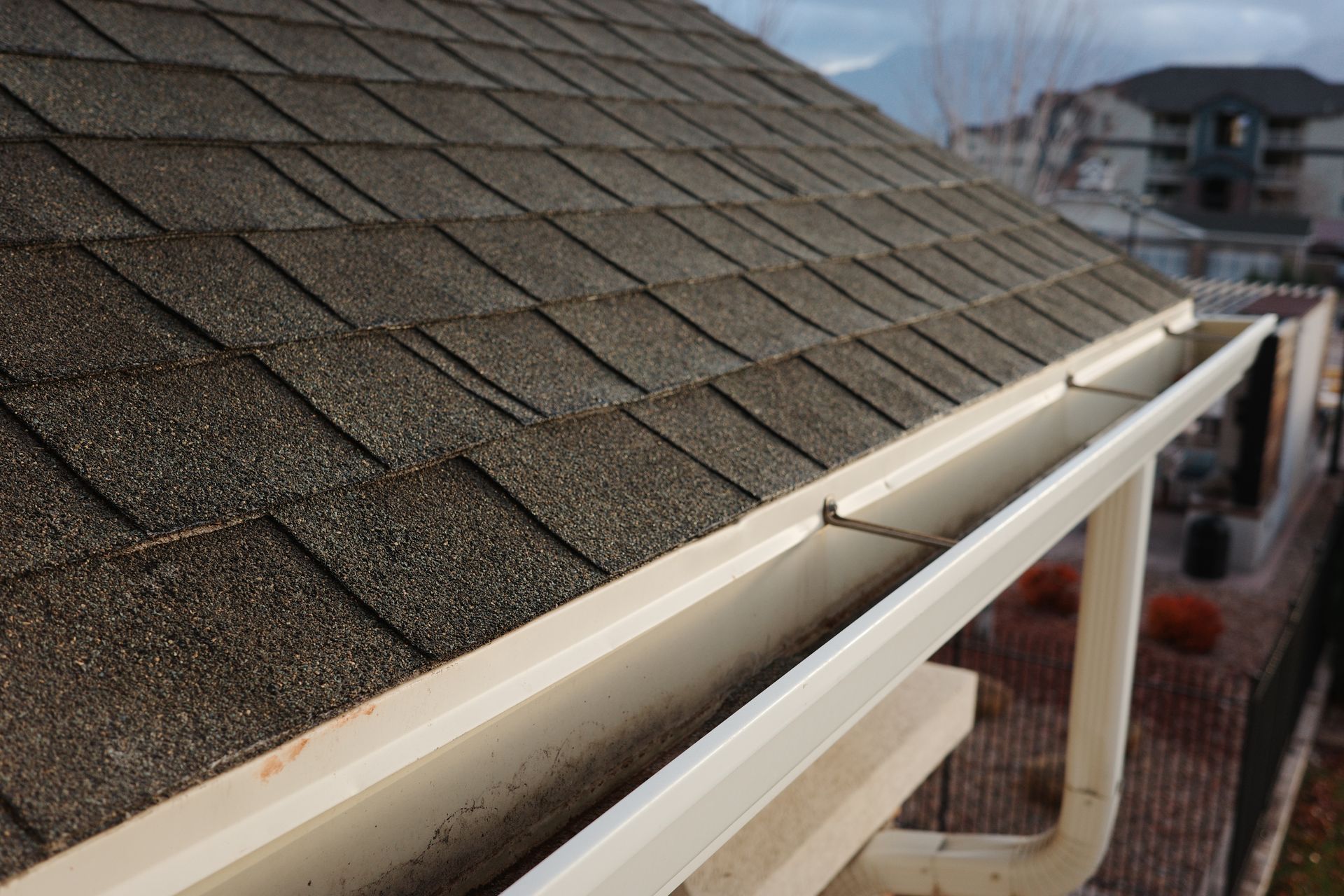
What Proper Gutter Installation Accomplishes
Gutter capacity depends on roof pitch, surface area, and regional rainfall rates—steeper roofs shed water faster and require larger gutters to handle peak flow during intense summer thunderstorms common in Southeastern Wisconsin. Five-inch gutters handle most residential applications, while homes with large roof planes or metal roofing that sheds water rapidly may need six-inch profiles. Hangers get spaced every twenty-four inches to prevent sagging under snow and ice loads, with fasteners driven into rafter tails or fascia backing rather than just fascia boards that can pull loose.
After installation, you'll notice that soil erosion along foundation walls stops, basement humidity drops, and water stains on foundation concrete quit appearing after rainstorms. Landscaping mulch stays in place instead of washing away, downspouts no longer ice up and pull away from walls during freeze-thaw cycles, and gutters drain completely instead of holding standing water that breeds mosquitoes and stains fascia boards. KC & Sons Construction sizes downspouts based on gutter length and roof drainage area, ensuring adequate capacity even during storms that drop two inches per hour.
Gutter guard systems reduce maintenance by keeping leaves and debris out while allowing water to enter, though fine mesh styles perform better than perforated covers in areas with pine needles and seed pods. Storm damage often affects hangers and end caps first, where wind and ice loads concentrate, so replacement projects check fascia condition and repair any rot before new gutters go up.
What Property Owners Usually Ask
Questions about gutter projects typically focus on sizing, maintenance, and how the system integrates with existing drainage infrastructure.
What determines the right gutter size for a home in Jefferson?
Roof area, pitch, and valley configurations affect how much water concentrates at specific points—homes with multiple valleys funneling runoff to one location need larger gutters and additional downspouts to handle peak flow during intense storms.
How do seamless gutters differ from sectional systems?
Seamless gutters are formed on-site in continuous lengths up to the full run distance, eliminating joints where sectional gutters connect with fasteners and sealant that eventually leak as materials age and thermal cycling loosens connections.
When do gutter guards make sense as part of the installation?
Properties with mature trees overhead benefit most, particularly those with oaks and maples that drop heavy leaf volumes in fall, though guards add upfront cost and still require occasional cleaning to remove fine debris that accumulates on mesh surfaces.
How far should downspouts extend from foundation walls?
At minimum six feet on graded soil that slopes away from the building, and farther on clay-heavy soils common in Wisconsin that drain slowly and allow water to pool near foundations if discharge points sit too close.
What causes gutters to overflow during moderate rain even when they appear clean?
Improper pitch creates low spots where water pools instead of flowing to downspouts, or undersized downspouts create bottlenecks that can't drain water as fast as gutters collect it from large roof areas.
KC & Sons Construction includes downspout placement planning in estimates, identifying optimal discharge locations that work with existing yard grades and drainage systems. Reach out to arrange an on-site assessment of your current gutter performance and discuss whether repair, upgrade, or full replacement best addresses your drainage concerns.